Where you could really live in Dubai for your salary - discover what’s possible based on your income
Find out where you can realistically live in Dubai based on your salary. Explore affordable areas, lifestyle options, and what your income can truly get you.
Published Date
March 26, 2026
Modified Date
August 17, 2026
Read Time
5 min read
Where you could really live in Dubai for your salary - discover what’s possible based on your income

Table of contents
1. The Affordability rule
2. The “I can move in” cash stack (what you’ll likely pay up front)
What can you realistically rent at different salary bands
Reality check on the rules that protect you
Elevate home searching with Prosper
FAQs
Related Blogs
Get Started With Prosper
Join owners and tenants across Dubai who manage everything in one place.
With a large, mobile expat workforce, Dubai’s rental market is in high demand and competition for popular rental communities can be very intense - with rental demand being volume-led at the lower end, but value-led at the top.
What you can realistically rent comes down to several factors – like your annual rent ceiling, your upfront cash and how well you can negotiate a friendlier cheque schedule.
This guide turns “What can I afford?” into a practical shortlist by salary band, with real-world rent benchmarks and the moving costs people often forget.
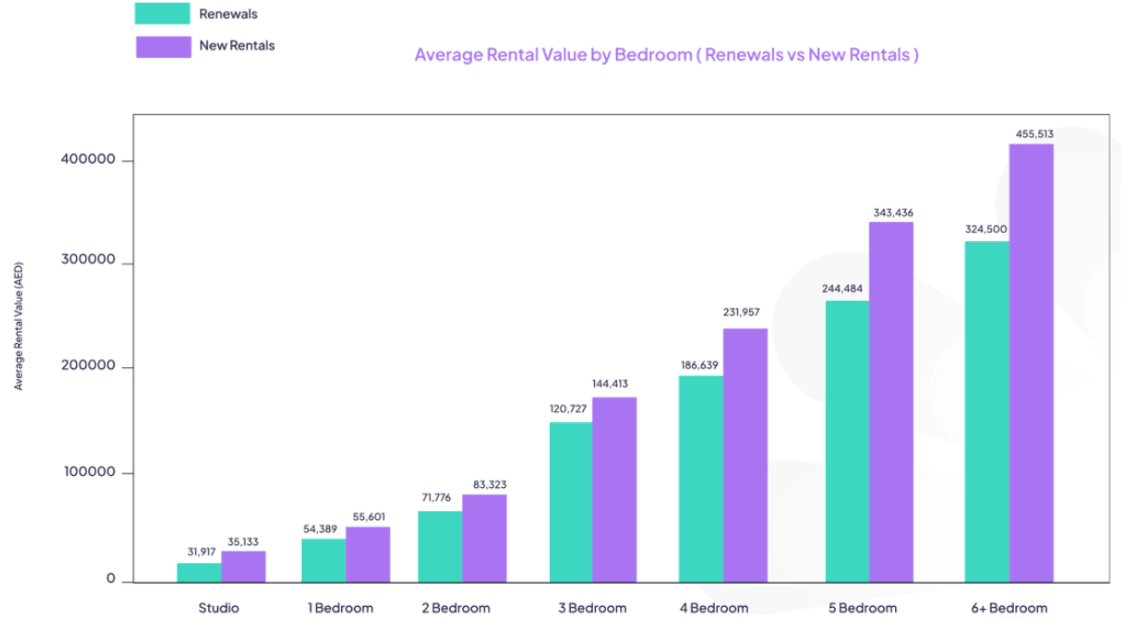
1. The Affordability rule
A widely used starting point in Dubai is “don’t spend more than 30% of your annual salary on annual rent.”
It’s a rule of thumb - not a law - but it gives you a quick ceiling for shortlisting areas before you fall in love with something that will squeeze you all year.
A practical way to use it (and keep your life enjoyable) is to run two numbers:
- Comfortable rent: ~25% of annual salary (more room for bills, travel, school fees, debt repayment).
- Maximum stretch: 30% of annual salary (doable for some, tight for many - especially if you’re supporting family).
Convert salary → annual rent budget
- Annual salary = monthly salary × 12
- Annual rent ceiling = annual salary × 0.25 (comfortable) to × 0.30 (stretch)
2. The “I can move in” cash stack (what you’ll likely pay up front)
Even if the rent fits your monthly income, you still need enough cash to activate the tenancy.
Common up-front items include:
- Ejari registration (mandatory tenancy contract registration): AED 177.75 via Dubai REST / DLD website, or AED 220 via trustee centres (fees differ by channel).
- Utilities deposit + activation via: AED 2,000 deposit for a flat (AED 4,000 for a villa) plus activation charges; DEWA explicitly links tenant move‑in to Ejari details.
- Agent commission (typical): 5% of annual rent or AED 5,000 (whichever is higher), plus VAT.
- First rent payment (your first cheque/instalment): if payment dates aren’t agreed in the contract, the law sets rent as four equal instalments paid in advance - a useful “default assumption” for budgeting, even though many landlords agree other cheque counts.
Why this matters: rental growth has moderated in recent periods but rents remain elevated overall, so budgeting both annual rent and upfront cash is what keeps you in control (rather than rushing into the first available unit).
What can you realistically rent at different salary bands
Whilst your exact outcome will depend on furnishing, building age, views, cheque count, and whether you’re competing with multiple applicants, see below for rental figures, anchored in Prosper’s Market intelligence.
Salary Bands Compared At A Glance
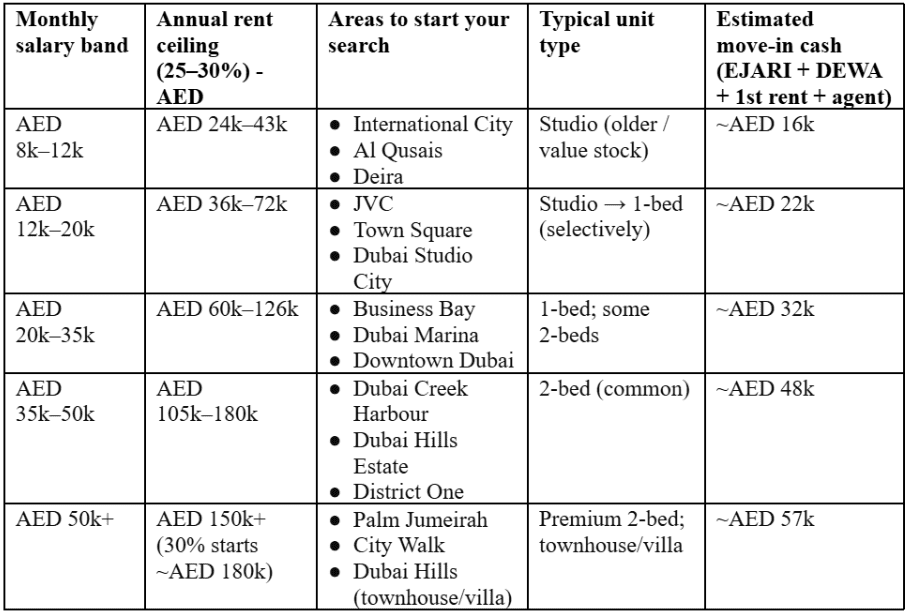
AED 8k–12k per month Salary
- 30% rent ceiling is roughly AED 28.8k–43.2k/year
- Comfortable band: AED 24k–36k/year
Did you know, roughly 1/3rd of all rental transactions in dubai are in this <50k bracket.
In terms of the type of property you can afford in this segment, this usually means studios, older stock, or “good value but further out” communities; a 1‑bed is possible at the very top of the band if you compromise on size, building age, or commute.
Neighborhoods that consistently show up as budget‑friendly at this level include International City, Al Qusais and Deira.
The trade‑off with this entry level segment is more day-to-day friction: longer commutes, fewer “walkable lifestyle” pockets, and being more selective about building management quality.
Your win however, is that you can prioritise basics (clean building, decent maintenance response, sensible layouts) and stay financially stable.
Up‑front cash is where many tenants get caught. Even on a cheaper rent, you should plan for Ejari plus DEWA deposit, plus the first rent cheque, plus agent commission (often hitting the minimum AED 5,000 + VAT).
AED 12k–20k per month Salary
- 30% ceiling is roughly AED 43.2k–72k/year
- Comfortable: AED 36k–60k/year
This is where Dubai opens up. You can often choose between a newer studio in a more “social” community or an older/larger 1‑bed further from the core.
Three realistic neighborhood options here are JVC, Town Square and Dubai Studio City.
Commute/amenity trade-offs become a “design choice” rather than a forced compromise. JVC and Town Square tend to give you newer buildings, pools/gyms, and community retail, but you’ll want to think through peak‑hour traffic patterns and access routes before committing.
Move‑in cash still matters a lot here because the agent fee minimum can be proportionally big. Build your “move-in buffer” around the first instalment and required fees; don’t forget DEWA’s refundable deposit.
AED 20k–35k per month Salary
- 30% ceiling is roughly AED 72k–126k/year
- comfortable: AED 60k–105k/year
This range commonly supports quality studios and 1‑beds in central-ish areas, and some 2‑beds if you choose buildings carefully or the lower end of premium neighborhoods.
Three representative neighborhoods at this level Business Bay; Dubai Marina; and Downtown Dubai.
The price jump between “good central” and “prime central” becomes very visible here - especially when you move from 1‑bed to 2‑bed in the most recognizable postcodes.
Lifestyle-wise, you’re paying for proximity: shorter commutes, more dining/retail density, and increasingly “destination” buildings.
Expect more competition for well-priced units, and get comfortable with fast decision-making - but still do a basic due diligence check (maintenance standards, chiller situation, parking, noise). Rental inflation is managed through the regulatory framework for renewals, but new lease prices can still move with demand.
AED 35k–50k per month Salary
- 30% ceiling is roughly AED 126k–180k/year
- Comfortable: AED 105k–150k/year
This is where you can realistically choose between a strong 2‑bed apartment in an upper‑mid community or a premium 1‑bed in a prime location - without doing financial gymnastics.
Three representative neighborhoods that align with this band are Dubai Creek Harbour; Dubai Hills Estate; District One.
In commute/amenities terms, you’re often choosing between newness and space versus centrality and brand-name location. You can typically secure better finishing, better facilities, and calmer communities- use that leverage when you view.
Up‑front cash will rise because agent commission scales with rent once you’re above the minimum. It’s also common in this band to care more about the move‑in condition (professional snagging, documented inspection) so that your deposit return is straightforward later.
AED 50k+ per month Salary
- 30% ceiling starts at AED 180k/year
- Comfortable: AED 150k/year+
This is the band where you can target genuinely premium apartments, and depending on income and priorities - move into the townhouse/villa conversation.
Three representative premium neighborhood options are Palm Jumeirah; City Walk; Dubai Hills (townhouse/villa).
Lifestyle expectations shift here: you’re often paying for high-quality builds, premium on-site amenities, better views, and “address value”. Your negotiation levers also change - landlords may care more about tenant profile, contract clarity, and payment security than squeezing the last AED 5k.
The up‑front cash requirement becomes meaningful, especially if a landlord prefers fewer cheques. If you move into a villa/townhouse, be aware that DEWA’s deposit is higher for villas, and maintenance clauses can have bigger cost implications. Get clarity in writing before you sign.
Illustrative Property Scenarios
Based on common Dubai housing features and the rent levels shown in market summaries.
Scenario A - AED 12k–20k band
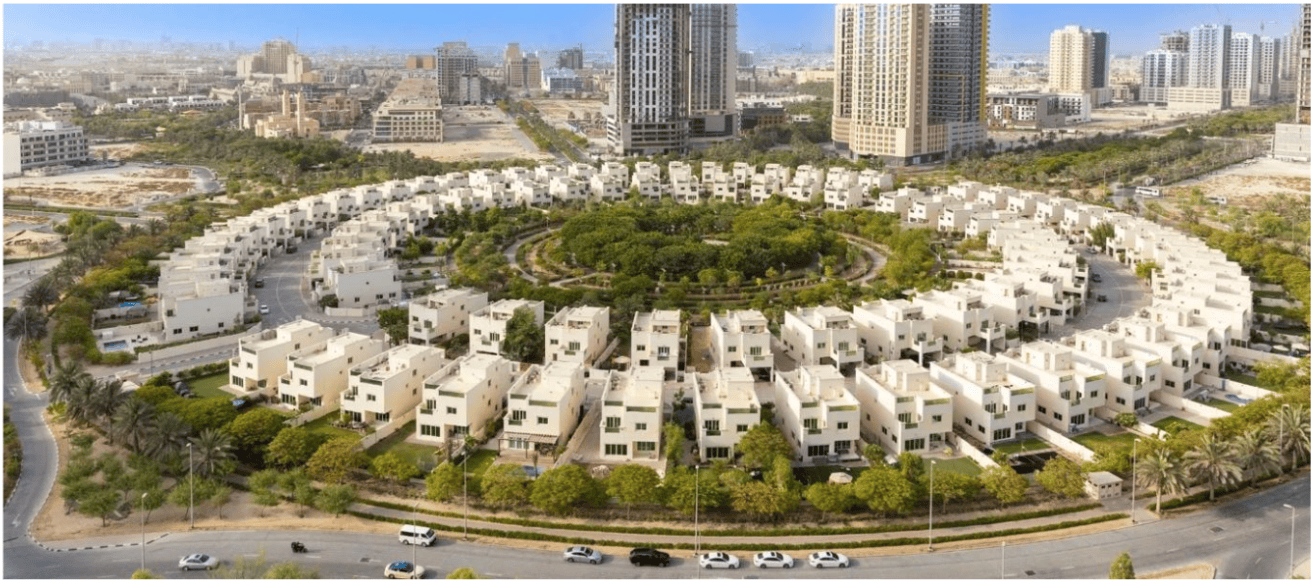
A 1‑bedroom apartment in JVC in a mid‑rise building with a small balcony, covered parking, and shared pool/gym. Expect a practical layout (open-plan kitchen/living), enough space for a proper sofa and desk, and a sleepable bedroom (not just a partition). In this band you’ll often choose between a slightly newer building with smaller rooms, or an older building with a bigger living area.
If you target a 1‑bed around the high‑60s/low‑70s annually, you’re in the zone of our averages for this community. Your quality-of-life upgrades come from choosing a building with solid maintenance and a sensible access route for peak hours.
Move‑in cash expectation: plan for Ejari and DEWA deposit, plus the first rent instalment. Commission can still hit the “minimum fee” territory, so a great deal can fail simply because you didn’t keep a buffer for the first month of paperwork and payments.
Scenario B – AED 35k–50k band
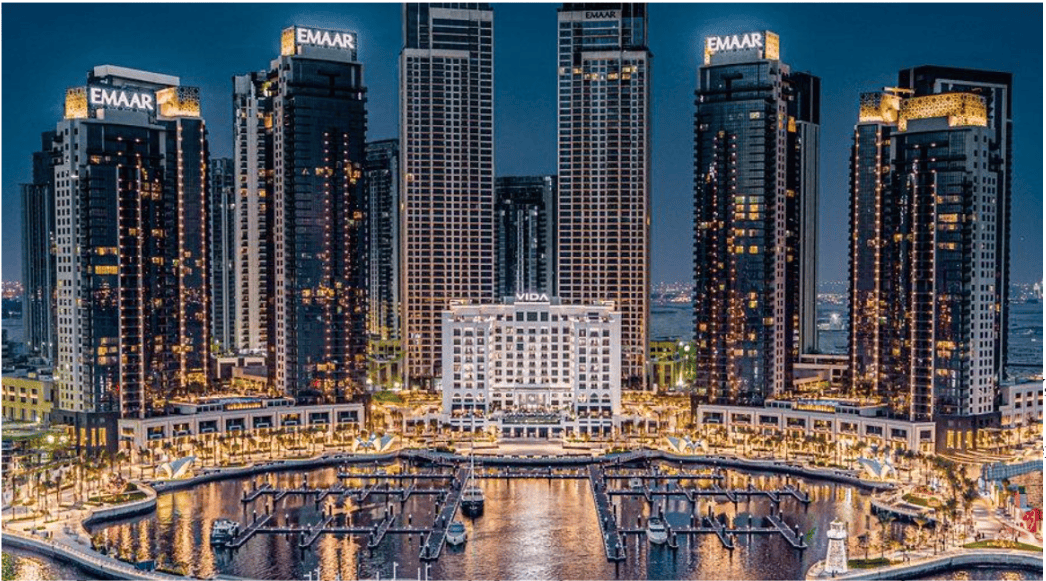
A 2‑bedroom apartment in Dubai Creek Harbour with a brighter finish, bigger balcony, and stronger community retail/food options nearby. This type of home is often ideal for a couple with a WFH setup (second bedroom as office) or a small family who wants a calmer “master‑planned” feel without leaving apartment living.
In this band, the question becomes: do you want space (a proper second bedroom, storage, parking convenience) or do you want to pay the premium for the most central postcodes? Averages for 2‑beds in this area sit in a range that many tenants in this salary band can handle without stretching to the limit.
Move‑in cash expectation rises because agent commission scales with rent once you’re above the minimum. Ask early about cheque count and any “open maintenance” clauses so you don’t discover surprises after you’ve mentally moved in.
Reality check on the rules that protect you
- Ejari/RERA registration is not optional. Lease contracts (and amendments) must be registered with RERA, and government/judicial bodies may not consider disputes linked to a lease unless it is registered. (Ejari is how this is typically done in practice.)
- Rent and contract changes need notice: if either party wants to amend terms, the law requires at least 90 days’ notice before contract expiry unless you agreed otherwise. Prosper users receive these alerts as standard.
- Renewal increases are capped by the legally defined rent‑increase bands (0% to 20%) based on how far your current rent sits below the approved “average rental value” for similar units.
- Eviction at expiry has strict rules: eviction on expiry is limited to specific grounds, and the landlord must provide at least 12 months’ notice served through a notary public or registered mail.
Elevate home searching with Prosper
Understanding what you can truly afford in Dubai puts you in control of smarter housing decisions.
From comparing neighborhoods to budgeting realistically, having the right tools makes all the difference. Prosper simplifies the process by helping you track your finances, estimate rental affordability, and explore better housing options tailored to your income.
With clearer insights and smarter planning tools, you can move forward with confidence.
Download Prosper now to choose the right property based on your salary.
Get Started With Prosper
Join owners and tenants across Dubai who manage everything in one place.